

USA v Karony Appeal
On May 24th, 2026, the appeal brief was filed by Nicholas Smith, appellant's counsel for the defendant Mr. Karony.
In a detailed appeal brief filed with the U.S. Court of Appeals for the Second Circuit, former SafeMoon CEO Braden John Karony (also known as John Karony or CPT HODL) challenges his March 2026 conviction and over-eight-year prison sentence. The case stems from the 2021 launch of SafeMoon (SFM), a decentralized finance token created by Kyle Nagy that promised automatic liquidity generation, reflections to holders, and “locked forever” liquidity pools to prevent rug pulls. Karony, then 25 and new to crypto, joined the project in March 2021 at the urging of co-defendant Thomas Smith and quickly became CEO as SFM exploded in popularity before the broader crypto market crash.
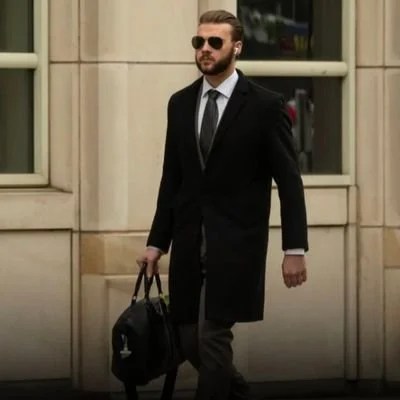
Mr. Karony (Appellant) seen in front of the EDNY courthouse in 2025
The government charged Karony, Smith, and the now-missing Nagy with conspiracy to commit securities fraud, wire fraud, and money laundering. Prosecutors claimed the team lied to investors by representing that the liquidity pool (LP) was automatically and permanently locked, while secretly retaining access and diverting millions to benefit themselves; the brief articulates why the government is at the very least incorrect. A jury convicted Karony after a two-week trial, but the appeal brief argues the entire proceeding was tainted by legal errors and government overreach.
At the heart of the appeal is the contention that SFM was never a “security” under the Securities Exchange Act of 1934. The brief asserts that a freely traded digital token on third-party exchanges, with no ongoing contractual promises from the issuer beyond the point of sale, fails the Supreme Court’s Howey test for an investment contract. It further claims the district court gave erroneous jury instructions on both the security element and extraterritoriality, and failed to define the critical “materiality” element for the wire-fraud conspiracy charge—despite both parties agreeing it required misrepresentations going to the “very essence of the bargain.”
The brief catalogs multitudes of trial errors that allegedly violated Karony’s Constitutional rights. These include the court sustaining over 230 defense objections (many without stated basis), sharply limiting cross-examination on materiality, admitting complex blockchain-tracing reports produced by a case agent as “lay” opinion just days before trial, and restricting the testimony of Karony’s disclosed materiality expert. It also argues the evidence was insufficient to prove venue in the Eastern District of New York—relying on a JFK airport arrival the government itself requested—and that public disclosures showed LP locking was manual and iterative, not automatic, while use of LP assets for seeding and liquidity was openly discussed on social media. The full brief covers a lot, including answers to questions like who actually owned the liquidity pools.
Finally, the appeal attacks the sentencing as procedurally and substantively flawed. The district court calculated Karony’s guidelines range using his alleged “gain” of over $9.5 million after finding victim losses could not be reasonably determined, yet later set restitution at exactly $3,347,046.66 based on unnotarized, unsworn claim forms citing anonymous wallet addresses. Karony’s attorneys ask the Second Circuit to reverse with instructions for a judgment of acquittal or, at a minimum, vacate the convictions and remand for a new trial, arguing that cumulative instructional and evidentiary errors centered on hotly contested elements require reversal. The case highlights ongoing tensions over how U.S. regulators and prosecutors treat digital assets in the post-FTX era.
It may be best for you to read the full brief to truly understand what happened in the USA v Karony case.