

The Stratos Project: A $100 Billion Data Center Colossus Rises in Rural Utah
The Stratos Project: A $100 Billion Data Center Colossus Rises in Rural Utah
In the remote, windswept Hansel Valley of Box Elder County, Utah — a sparsely populated corner of the state beloved by locals for its wide-open spaces, hiking, hunting, and quiet rural lifestyle — one of the largest data center complexes on Earth is taking shape. Backed by Shark Tank investor Kevin O’Leary through his O’Leary Digital venture, the Stratos Project (also branded as Wonder Valley) envisions a sprawling 40,000-acre campus capable of housing up to 9 gigawatts of hyperscale computing power.
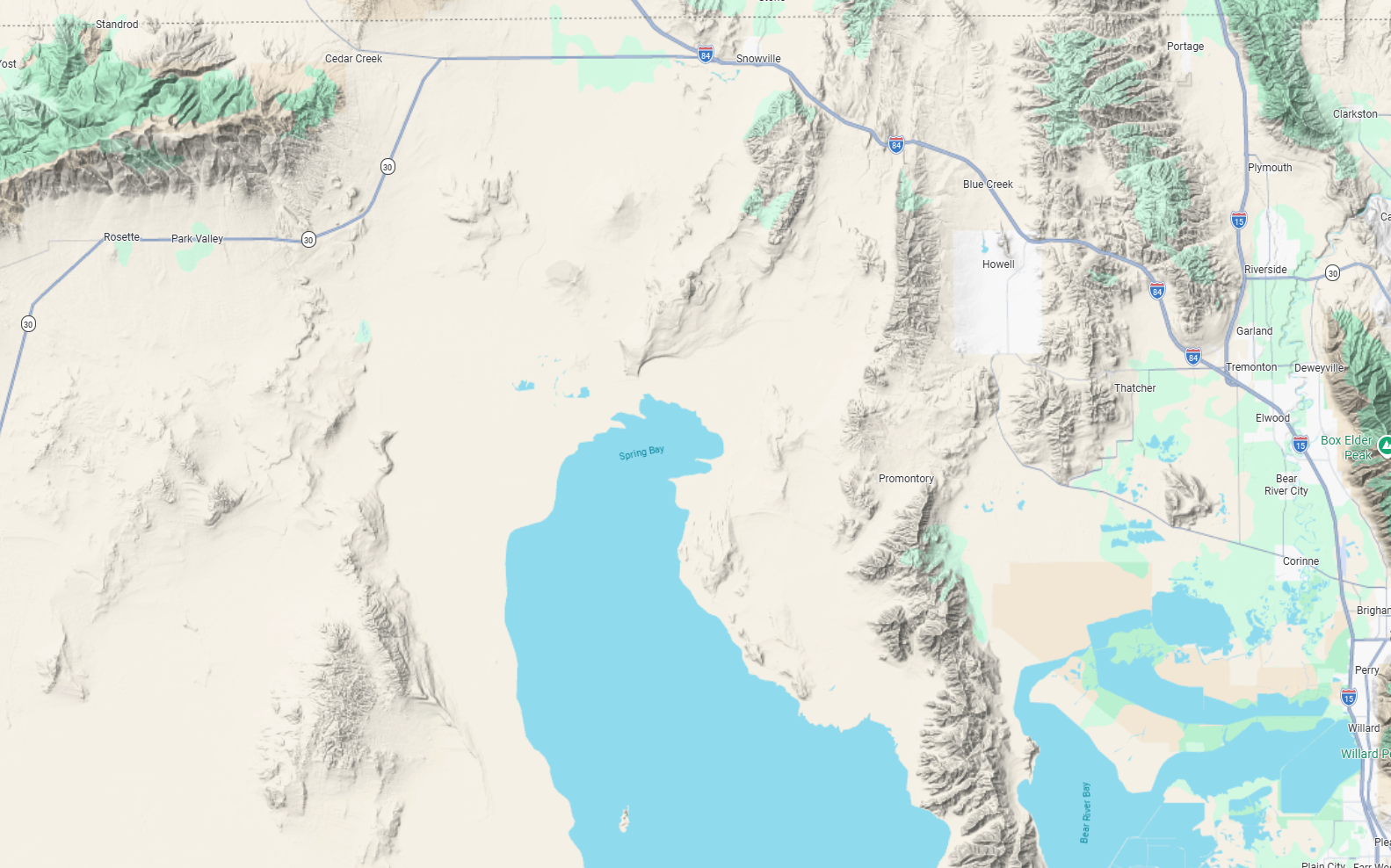
Box Elder County
Recent unanimous approval by the Box Elder County Commission in early May 2026 has accelerated momentum, though the full vision remains far from finalized. Renderings released by architecture firm Gensler depict 60 sleek, desert-toned buildings clustered across an initial 10,000-acre phase, with buffer zones, solar arrays, and preserved native landscape. The project is pitched as a national security asset for AI, cloud, and defense computing, positioned near military installations and powered initially by on-site natural gas from the Ruby Pipeline.
Proponents highlight transformative economic benefits. The development is expected to create thousands of construction jobs over a multi-year phased buildout, followed by thousands of permanent positions. Box Elder County stands to gain millions in early tax revenue, projected to reach $108 million annually — funds earmarked for emergency services, roads, schools, and infrastructure, without raising property taxes for residents. Developers and supporters, including some state leaders, frame it as essential for America’s technological edge against global competitors and a catalyst for broader energy abundance.
Yet these promises collide head-on with Utah’s harsh environmental realities. The state is in the grip of a prolonged drought, and the nearby Great Salt Lake — already at critically low levels — faces further stress from any new water demands. Critics warn of a potential “heat island” effect that could worsen local temperatures and air quality, as well as a massive spike in greenhouse gas emissions (some analyses estimate a 50-64% increase statewide from gas-fired power plants alone). Water use is the flashpoint: while the project touts closed-loop dry/air cooling and on-site rights to salty groundwater that supposedly avoid impacting homes, farms, or the Great Salt Lake, independent estimates for power-generation cooling alone reach 16.6 billion gallons annually — equivalent to filling tens of thousands of Olympic-sized pools.
Public opposition has been fierce and vocal. Hundreds packed county commission meetings, holding signs and voicing fears that the project would “utterly transform” the valley, harm migratory bird habitat, and exacerbate toxic dust storms from the shrinking lake. Nearly 4,000 formal protests flooded the Utah Division of Water Rights over an initial water application (later withdrawn and refiled), and a citizens’ group is gathering signatures for a November referendum to overturn the county’s approval. Environmental organizations like the Sierra Club and Utah Rivers Council, alongside local ranchers and outdoor enthusiasts, argue the process has lacked transparency and that the long-term costs to Utah’s water, air, and quality of life far outweigh short-term gains.
O’Leary and project backers have mounted an aggressive defense, particularly on social media. The celebrity investor has dismissed concerns about the Great Salt Lake as “ridiculous,” citing his own background in environmental studies, and claimed that more than 90% of protesters are non-Utah residents — “professional” activists allegedly bused in or organized from outside the state (a claim disputed by locals and organizers). He has emphasized the project’s national security importance (“We can’t let the Chinese beat us”), invited Box Elder residents to tour plans, highlighted land preservation (thousands of acres set aside), and pointed to technological mitigations like closed-loop systems and future shifts toward nuclear, geothermal, and solar power. Lobbyists have been hired, and renderings stress aesthetic integration with the desert landscape.

Kevin O’Leary from Shark Tank
Utah Governor Spencer Cox has acknowledged the rollout “was not good,” criticizing the lack of early transparency and calling for greater state and legislative involvement in future mega-projects of this scale. While the county greenlight allows early site work, possibly as soon as fall 2026 (with the first gigawatt of capacity targeted within two years), critical state air and water permits, environmental reviews, and potential legal challenges remain outstanding. The full 9-gigawatt vision could unfold over more than a decade.
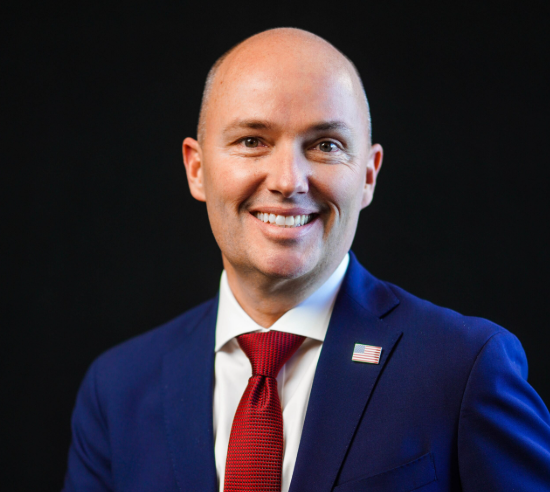
Governor Cox
In the end, the Stratos Project encapsulates the defining tension of the AI age: the explosive demand for computing power and energy versus the finite resources of arid Western landscapes. Whether this becomes a model of responsible hyperscale development — with verifiable water savings, cleaner power transitions, and genuine local benefits — or a cautionary tale of rushed industrialization will depend on whether the developers and others involved with the megaproject can deliver on their promises. For now, Box Elder County and Utah find themselves at the center of a high-stakes experiment whose outcome could reshape not just one rural valley, but the future of data infrastructure across the drought-stressed American West. The conversation is far from over, and remains a heated discussion in the state of Utah.
Sources:
Box Elder County Official Stratos Project Fact Sheet (water, jobs, taxes, power, mitigations) https://www.boxeldercountyut.gov/647/Stratos-Project-Fact-Sheet
Dezeen – First images and Gensler design details (60 buildings, 7.5–9 GW, desert aesthetic, land preservation) https://www.dezeen.com/2026/05/15/stratos-data-center-designs-gensler-utah/
Salt Lake Tribune – Gov. Spencer Cox on rollout & backlash (May 21, 2026) https://www.sltrib.com/news/environment/2026/05/21/utah-gov-spencer-cox-says-rollout/
CNN Business – Why Utah residents are protesting (May 9, 2026) https://www.cnn.com/2026/05/09/tech/ai-data-center-utah-kevin-oleary-opposition
Cache Valley Daily – Hundreds file to block the project over water concernshttps://www.cachevalleydaily.com/news/hundreds-of-utahns-file-to-block-kevin-o-leary-s-proposed-massive-data-center-campus/article_eea61d19-f3fd-4951-a517-b14b3353dd1f.html
Salt Lake Tribune – Utahns send deluge of concerns / water rights protestshttps://www.sltrib.com/news/environment/2026/05/01/utahns-send-state-deluge-concerns/
Utah Clean Energy – Estimated emissions and water consumption (16.6 billion gallons/year figure) https://utahcleanenergy.org/estimated-emissions-and-water-consumption-from-the-proposed-stratos-data-center/
The Guardian – “Irresponsible”: backlash as Utah approves datacenter (May 13, 2026) https://www.theguardian.com/us-news/2026/may/13/utah-approves-datacenter-backlash
KSL / ABC4 coverage of protests and referendum effort (multiple recent articles) https://www.ksl.com/article/51501551/hundreds-of-utahns-rally-against-proposed-box-elder-data-center
O’Leary Digital / project renderings (via news coverage) https://www.abc4.com/news/northern-utah/renderings-box-elder-data-center-stratos/